
What Is Copy.ai in 2025? The GTM AI Platform Explained
Copy.ai has undergone one of the most dramatic pivots in the AI writing space. What started as a simple copywriting assistant built on GPT-3 has transformed into a full-scale Go-to-Market (GTM) AI Platform — a system designed to automate the entire process of finding, engaging, and converting customers. If you last looked at Copy.ai a year or two ago, you're essentially looking at a different product today.
For sales and marketing teams doing high-volume email outreach, this pivot is significant. Copy.ai is no longer competing with general writing tools — it's positioning itself alongside platforms like Instantly and Smartlead for revenue-generating workflows. This guide covers exactly what that means, what the platform can and can't do, and whether it fits your email marketing strategy.
Core Features: What the GTM AI Platform Actually Does
Workflows and AI Agents
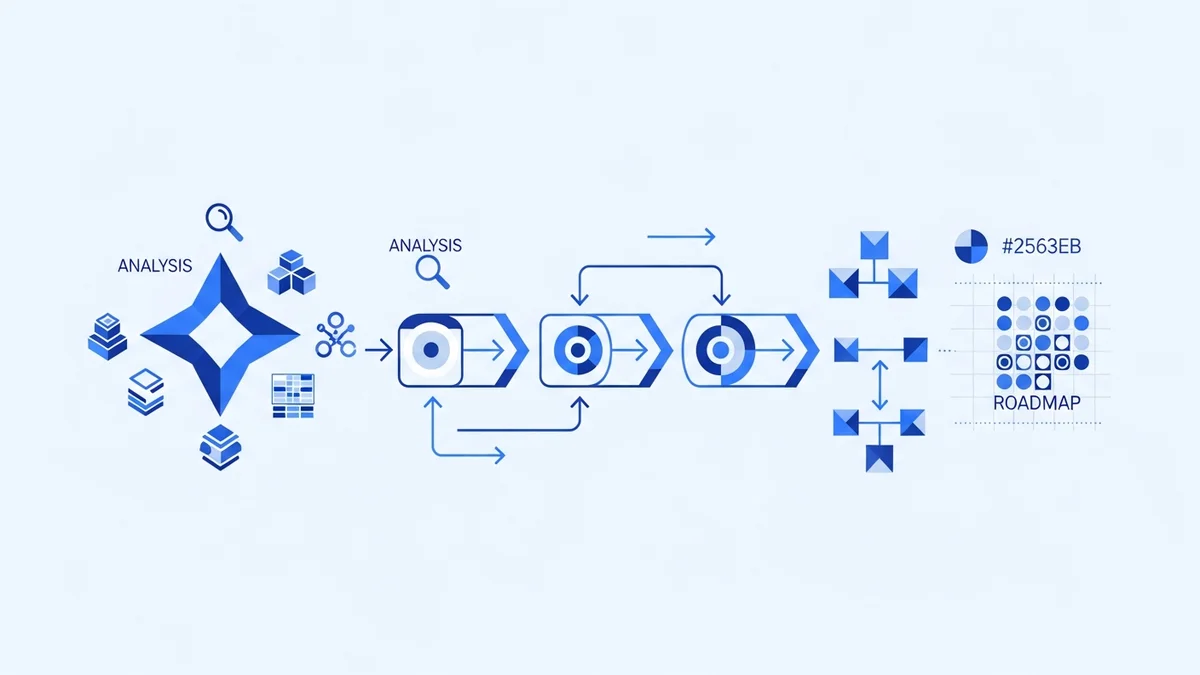
The backbone of Copy.ai's current product is its Workflows and Agents system. These are multi-step automation pipelines that let teams turn their best practices into repeatable, AI-powered processes. Unlike simple prompt-based tools, workflows chain together multiple actions — research, enrichment, writing, and sending — without manual intervention at each step.
A practical example for email teams: a sales workflow that pulls a company name, researches their recent news and product updates, identifies a contact, and drafts a highly personalized cold email — all without a human touching each step. This is materially different from what tools like Jasper offer, which still require significant manual orchestration.
The agent layer goes further — Copy Agents can operate autonomously within defined guardrails, handling multi-turn tasks like inbound lead qualification or content generation across multiple formats simultaneously.
Tables: Unified Data Layer
Copy.ai's Tables feature functions as an internal data store for GTM operations. Teams can bring in CRM data, prospect lists, or campaign assets and use them to power personalization at scale. Rather than juggling exports between your CRM, spreadsheet, and writing tool, Tables centralizes the data your workflows need.
This is especially useful for account-based marketing (ABM) campaigns where personalization is critical. Instead of manually customizing 200 emails, Tables lets you feed account-level data into a workflow and auto-generate tailored messages for each prospect.
Brand Voice
Copy.ai includes a Brand Voice feature that lets teams define tone, style, vocabulary preferences, and messaging guardrails. The system learns from examples you provide and applies that voice consistently across all generated content. This solves one of the most common complaints with AI-generated email: output that sounds generic or inconsistent with company messaging.
For email teams, this means cold outreach, nurture sequences, and marketing newsletters can all maintain the same voice — even when generated by different team members or automated workflows.
Content Creation and Localization
Despite the GTM repositioning, content creation remains a core capability. Copy.ai handles:
- Long-form blog posts and thought leadership articles
- Cold email sequences and follow-up chains
- Social media content and ad copy
- Translation and localization for multi-market campaigns
- Landing page and web copy
The Translation and Localization use case is particularly strong. For companies running international email campaigns, Copy.ai can generate market-specific variations that go beyond literal translation — adapting tone and messaging to local business norms.
GTM Systems Integrations
Copy.ai connects to CRMs, email platforms, and data enrichment tools via its Actions framework. Actions are the building blocks that let workflows interact with external systems — pulling data from Salesforce, pushing content to HubSpot, or triggering emails through your sending platform. The integration layer is what makes Copy.ai a platform rather than just a writing assistant.
Copy.ai Pricing: What You'll Actually Pay
| Plan | Price | Best For | Key Limits |
|---|---|---|---|
| Free | $0/month | Individual exploration | Limited workflow runs, no team features |
| Starter | $49/month | Freelancers and solo marketers | 1 seat, basic workflows |
| Advanced | $249/month | Small marketing and sales teams | 5 seats, full workflow builder, Brand Voice |
| Enterprise | Typically $1,000+/month | Large GTM teams, ABM at scale | Custom seats, SSO, dedicated support, advanced security |
Newsletter
Get the latest SaaS reviews in your inbox
By subscribing, you agree to receive email updates. Unsubscribe any time. Privacy policy.
The free tier is genuinely useful for testing the tool's writing capabilities, but the GTM platform features — Workflows, Agents, Tables — require a paid plan. For teams doing serious email outreach volume, the Advanced plan at $249/month is the minimum that makes the platform's automation capabilities accessible.
How Copy.ai Compares to Alternatives
Choosing the right platform depends on what your email operation actually looks like. Here's how Copy.ai stacks up against key competitors:
| Tool | Primary Focus | Best For | Starting Price |
|---|---|---|---|
| Copy.ai | GTM AI platform (content + automation) | Sales/marketing teams needing end-to-end workflow automation | $49/month |
| Jasper | Long-form AI writing | Content teams needing polished long-form output | $49/month |
| Instantly | Cold email sending and deliverability | High-volume cold outreach with inbox rotation | $37/month |
| Smartlead | Cold email infrastructure | Agencies running multi-client outreach at scale | $39/month |
| ActiveCampaign | Email marketing automation | SMBs needing CRM + email automation combined | $15/month |
The key distinction: Copy.ai generates and orchestrates content workflows, but it is not a sending platform. You still need a dedicated email sender like Instantly or Smartlead for actual delivery. Copy.ai sits upstream in the workflow — it writes and enriches, your sender delivers.
Who Should Use Copy.ai (And Who Shouldn't)
Strong Fit
- B2B sales teams running personalized cold outreach at volume — the Workflows + Agents combination significantly reduces manual research and writing time per prospect
- Account-based marketing teams that need highly customized content for target accounts without a large content team
- Marketing ops teams looking to standardize content production with Brand Voice guardrails across multiple writers or campaigns
- International companies running multi-market email campaigns who need localization at scale without hiring native translators for every market
Poor Fit
- Individual bloggers or solo content creators — the GTM platform's power is overkill, and simpler tools like Jasper offer better value at the $49 price point
- E-commerce email marketers focused on list-based campaigns — tools like ActiveCampaign or Klaviyo provide tighter integration with purchase behavior and segmentation
- Teams looking for inbox management AI — Copy.ai doesn't help with email triage, prioritization, or inbox organization. For that, look at Superhuman or SaneBox
Common Mistakes When Using Copy.ai
Mistake 1: Treating It Like a Simple AI Writer
Many users sign up for Copy.ai expecting a prompt box where they type a request and get content back. That approach works, but it completely misses the platform's value. Teams that see the best ROI are those that invest 2-3 hours upfront building reusable Workflows — the payoff compounds over hundreds of future runs.
Mistake 2: Skipping Brand Voice Setup
The most common complaint about AI-generated email copy is that it sounds generic. This is almost always because users skipped the Brand Voice configuration. Without it, Copy.ai defaults to neutral, generic output. With it, the difference in output quality is dramatic. Spend 30 minutes training Brand Voice before you run your first production workflow.
Mistake 3: Using Copy.ai Without a Dedicated Sender
Copy.ai doesn't handle deliverability, inbox warming, or sending infrastructure. Teams that generate cold email sequences in Copy.ai and then send them through Gmail directly run into deliverability problems at volume. The right stack pairs Copy.ai for content generation with a platform like Instantly or Lemlist for sending.
Mistake 4: Not Fact-Checking AI Output
Copy.ai, like all LLM-based tools, can generate plausible-sounding but inaccurate information — particularly when writing about specific companies, products, or statistics in outreach emails. Always build a review step into your workflow before emails go out. An inaccurate personalization detail in a cold email damages credibility more than a generic one.
Mistake 5: Underinvesting in Prompt Quality
Vague prompts produce vague output. "Write a cold email for a SaaS company" produces weak copy. "Write a cold email for a CFO at a 200-person manufacturing company, referencing their recent supply chain challenges, leading with cost reduction, and keeping it under 120 words" produces something usable. The more specific the input, the more targeted the output — this applies whether you're writing manually or building it into a workflow template.
Getting Started: The Right First Steps
If you're evaluating Copy.ai for your email and marketing operation, here's a practical starting sequence:
- Week 1: Use the free plan to generate 10-20 cold email variants for your primary use case. Evaluate output quality and how much editing each requires before it's send-ready.
- Week 2: If quality meets your bar, upgrade to Starter or Advanced and configure Brand Voice with 5-10 examples of your best-performing past emails.
- Week 3: Build your first workflow — start with something straightforward like a 3-step prospecting sequence that takes a company name and generates a personalized intro, value prop, and CTA.
- Month 2+: Connect Copy.ai to your CRM and sending platform via Actions. At this point you're operating a genuine GTM automation system, not just a writing assistant.
The teams that get the most out of Copy.ai treat it as infrastructure, not a shortcut. The upfront investment in workflow design pays off in consistent, scalable output quality that a purely manual process can't match.
Final Verdict
Copy.ai in 2025 is a genuinely powerful platform — but only if you need what it's actually built for. For B2B sales and marketing teams running personalized outreach at scale, the Workflows, Agents, Tables, and Brand Voice combination is a compelling system that goes well beyond what most AI writing tools offer.
For solo marketers, e-commerce teams, or anyone primarily focused on inbox management rather than content generation, Copy.ai is likely more platform than you need. In those cases, purpose-built tools will serve you better at lower cost.
If you're evaluating the broader landscape, compare Copy.ai directly against Jasper for content-heavy teams, Instantly for cold outreach infrastructure, and ActiveCampaign for full email marketing automation. Each solves a different slice of the problem — and for many teams, Copy.ai works best as one component in a multi-tool stack rather than a standalone solution.