
Apollo vs Lemlist: Which Cold Outreach Tool Is Actually Worth It in 2026?
Apollo and Lemlist are two of the most frequently compared tools in the cold outreach space — and for good reason. They both sit in the "sales engagement" category, they both touch email, and they're both popular enough to generate genuine debate. But after running campaigns through both platforms, the honest answer is that they are solving fundamentally different problems, and picking the wrong one is an expensive mistake.
This comparison cuts through the marketing language and looks at what each platform actually does well, where each one falls short, and which type of team should be using which tool. We'll cover email capabilities, lead database quality, LinkedIn automation, deliverability, and pricing — with real numbers from the research, not vague promises.
What Is Apollo.io?
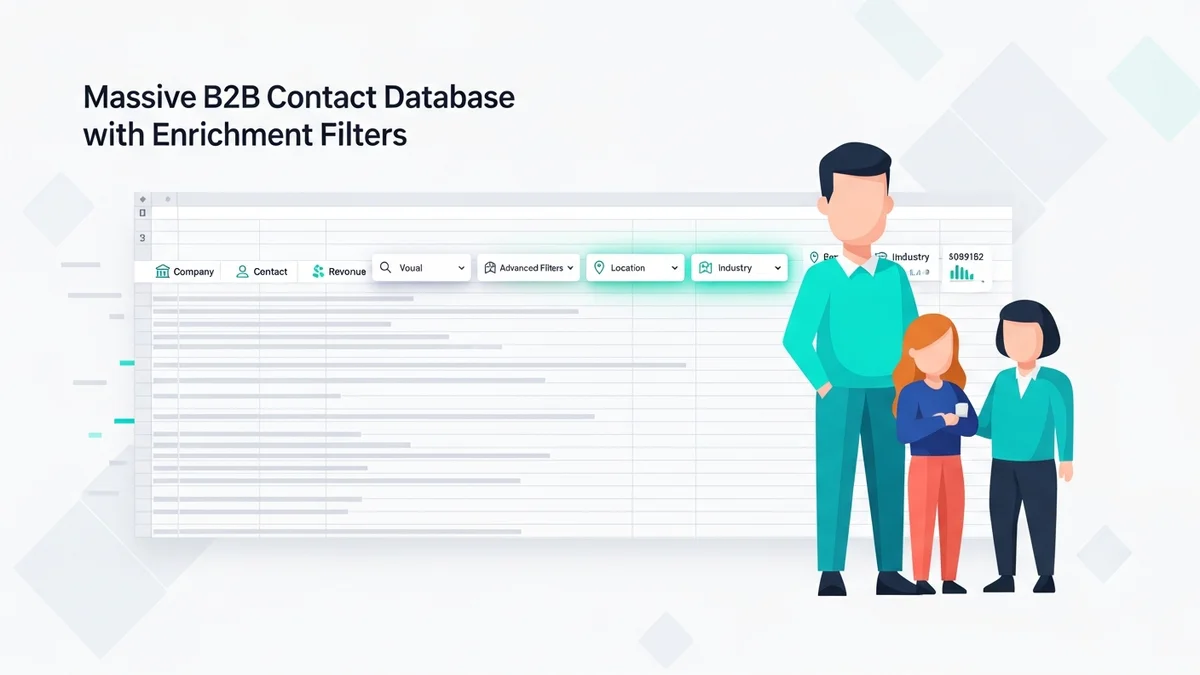
Apollo.io is an all-in-one sales intelligence and engagement platform. Its core value proposition is the database: over 210 million verified contacts that you can search, filter, and export directly into outreach sequences. For enterprise sales teams and SDRs who need to build prospect lists from scratch, this is legitimately compelling.
Apollo handles the full prospecting pipeline — find contacts, enrich them with data, build sequences, and send emails. On paper, it covers everything. In practice, it's a broad platform that does many things at a decent level rather than one thing exceptionally well. Its G2 rating of 4.4 reflects this: solid but not outstanding.
The biggest gap in Apollo's stack is deliverability infrastructure. It does not include built-in email warm-up features, which in 2026 is a meaningful weakness. As inbox providers tighten their algorithms, sending cold email at volume without a warm-up layer is a fast way to hurt domain reputation.
What Is Lemlist?
Lemlist was built from the ground up for cold email personalization. It introduced dynamic image and video personalization to cold outreach — the ability to embed a prospect's name, company logo, or LinkedIn photo into a custom-designed image in the email body. That capability still differentiates it from most competitors.
Lemlist's other major differentiator is Lemwarm, its built-in email warm-up system. This is not a bolt-on feature — it's integrated directly into the platform and actively protects deliverability by gradually increasing sending volume and simulating real engagement patterns. For teams serious about landing in the inbox, this matters enormously.
Its G2 rating of 4.7 reflects a more focused product with a clearer use case. But Lemlist has real limitations: its lead database is thin compared to Apollo's 210 million contacts, and its LinkedIn automation is notably weak — a significant drawback for B2B teams that rely on multi-channel sequences.
Head-to-Head Feature Comparison
| Feature | Apollo | Lemlist |
|---|---|---|
| G2 Rating | 4.4 | 4.7 |
| Contact Database | 210M+ verified contacts | No native database |
| Email Warm-Up | Not included | Lemwarm (built-in) |
| Email Personalization | Standard merge fields | Dynamic images, videos, custom fields |
| LinkedIn Automation | Basic, Chrome extension (prone to crashes) | Limited, account safety concerns |
| Multi-Channel Sequences | Yes (email + LinkedIn + calls) | Yes (email + LinkedIn, limited) |
| Starting Price | Free ($0/mo) | $69/mo (Email Pro) |
| Mid-Tier Price | $99/mo (Pro) | $99/mo (Multichannel) |
| Enterprise Price | $149/mo (Org) | Not published |
Email Capabilities: Lemlist Wins on Personalization, Apollo Wins on Scale
These tools approach email from opposite directions, and understanding that difference is critical to making the right choice.
Apollo's Email Approach
Apollo's email functionality is designed for volume and efficiency. You can build sequences, set send windows, A/B test subject lines, and monitor open/click data. The integration with its contact database means you can go from search to sequence in minutes. For high-volume SDR teams running hundreds of outreach threads simultaneously, this is a real operational advantage.
Newsletter
Get the latest SaaS reviews in your inbox
By subscribing, you agree to receive email updates. Unsubscribe any time. Privacy policy.
The critical gap is the lack of built-in warm-up. If you're starting with a new domain or inbox — which is standard practice for cold outreach to protect your primary domain — you'll need to plug in a third-party warm-up tool like Instantly or Smartlead alongside Apollo. That adds cost and complexity to your stack.
Lemlist's Email Approach
Lemlist's email capabilities are more sophisticated on a per-email basis. The dynamic image personalization feature is genuinely impressive — you can automatically insert a prospect's LinkedIn profile photo, their company website screenshot, or custom text into a designed image template. This level of visual personalization is still rare in the cold email space and measurably improves response rates when done well.
Add Lemwarm on top of that, and you have a platform that takes deliverability seriously end-to-end. Lemwarm gradually ramps up your sending volume, simulates natural engagement (opens, replies, moving emails out of spam), and monitors your sender reputation. For teams whose business depends on cold email working, this integrated approach is more reliable than bolting on a separate warm-up tool.
The tradeoff is ceiling: Lemlist is better suited for quality-over-quantity outreach. If you need to send 10,000 emails a week at scale, Apollo's architecture handles that more cleanly.
Lead Database and Prospecting
This is where Apollo has a clear, undisputed advantage. Its database of 210 million verified contacts is one of the largest in the industry. You can filter by job title, company size, industry, technology stack, geography, and dozens of other attributes. For sales teams that previously relied on manual list-building or paid for separate data tools, Apollo consolidates that into a single platform.
Lemlist has no comparable database. You bring your own list — imported from a CSV, connected via a CRM integration, or pulled from a third-party prospecting tool. This is not necessarily a fatal flaw. Many experienced outreach teams prefer to curate their own lists for higher targeting precision. But it does mean Lemlist is not a one-stop-shop for prospecting, and teams using it will need a separate data source.
If your current stack involves buying lists or using a standalone enrichment tool, Apollo's all-in-one model can meaningfully reduce that complexity and cost. If you already have solid list-building processes, Lemlist's lack of a database is a non-issue.
LinkedIn Automation: Neither Platform Gets This Right
This is an honest assessment that most comparison posts avoid: both Apollo and Lemlist have weak LinkedIn automation relative to specialized tools.
Apollo's LinkedIn Limitations
Apollo's LinkedIn functionality runs through a Chrome extension rather than a cloud-based system. This creates two practical problems. First, Chrome extensions are inherently fragile — they depend on your browser being open and can crash or break when LinkedIn updates its interface. Second, extension-based automation is easier for LinkedIn to detect and flag, which creates account safety risks that cloud-based tools largely avoid. Apollo rates a middling 3 stars on LinkedIn automation for good reason.
Lemlist's LinkedIn Limitations
Lemlist's LinkedIn automation is described generously as "limited functionality." Account safety concerns are explicitly noted, and the overall experience is rated at 2 stars — lower than Apollo. For teams building multi-channel sequences that include LinkedIn touchpoints, Lemlist's shortcomings here are a significant constraint.
If LinkedIn outreach is central to your strategy, neither of these tools is the right primary choice for that channel. Both are better suited to email-led outreach with LinkedIn as a secondary touchpoint at best.
Pricing Breakdown
Apollo has a meaningful advantage at the entry level: it offers a functional free tier at $0 per month. This makes it accessible to individual sales reps and early-stage teams testing cold outreach before committing to a paid plan. Its Pro plan at $99/month and Org plan at $149/month are competitive for the breadth of features included — particularly the database access.
Lemlist starts at $69/month for its Email Pro plan, which covers core email personalization and Lemwarm. The Multichannel plan, which adds LinkedIn and other channels, runs $99/month — identical to Apollo's Pro tier. At parity pricing, the question becomes what you value more: Apollo's database and breadth, or Lemlist's deliverability features and personalization depth.
For teams on tight budgets, Apollo's free tier is a meaningful differentiator. You can validate whether cold outreach works for your business before spending anything. Lemlist has no free tier, only a trial period.
It's also worth noting that neither tool operates in complete isolation in most mature stacks. Teams using Apollo often add a warm-up tool; teams using Lemlist often add a data enrichment tool. When you account for the full stack cost, the price gap between the two platforms narrows.
Who Should Use Apollo?
Apollo is the right choice if your primary bottleneck is finding qualified prospects. Enterprise SDR teams, B2B sales organizations with high outreach volume, and teams that currently pay for separate data tools will get the most value from Apollo's combination of database access and sequencing. The free tier also makes it low-risk to evaluate.
You should be prepared to handle deliverability separately, either by warming inboxes through a third-party tool or by managing sending limits carefully from established domains. Apollo's lack of warm-up is a real operational gap that requires deliberate mitigation.
Who Should Use Lemlist?
Lemlist is the right choice if email deliverability and personalization are your top priorities and you already have (or can build) a reliable prospect list. Marketing teams running account-based outreach, agencies managing client campaigns, and teams that have been burned by deliverability problems will find Lemlist's integrated approach genuinely valuable.
The dynamic image and video personalization features give Lemlist a differentiated angle that can meaningfully improve engagement rates in saturated inboxes. If you're competing in a crowded vertical where generic cold emails are ignored, the extra personalization layer can change response rates materially.
Teams that need LinkedIn as a primary outreach channel should look at purpose-built LinkedIn automation tools rather than relying on Lemlist's limited capability there. Similarly, teams that need AI-powered email writing assistance might consider pairing either platform with a dedicated writing tool — tools like Copy.ai integrate with most outreach platforms and can improve copy quality across high-volume sequences.
Verdict: Different Tools for Different Jobs
The Apollo vs Lemlist debate doesn't have a universal winner — it has a context-dependent answer. Apollo wins on data, breadth, and accessibility. Lemlist wins on deliverability infrastructure, personalization depth, and user satisfaction as reflected in its higher G2 score.
If you're a growing sales team that needs to build prospect lists and run outreach at scale, start with Apollo and invest in a warm-up solution for your sending infrastructure. If you're a marketing team or agency that already has a list and needs to maximize inbox placement and email engagement, Lemlist's integrated approach is worth the premium over a bare-bones sequencing tool.
Neither platform should be the only tool in your stack if LinkedIn is a serious channel for you. And neither fully replaces the value of having strong copy — no amount of personalization technology compensates for a weak pitch. For teams looking to pressure-test email performance beyond these two options, platforms like Smartlead offer another angle worth evaluating, particularly for high-volume cold email with built-in warm-up as a core feature rather than an afterthought.
The right question isn't "which is better" — it's "which is better for what I'm actually trying to do." Answer that honestly and the choice becomes straightforward.