
Mailchimp vs ActiveCampaign: The Honest Comparison You Actually Need
Two of the most recognized names in email marketing — and yet they serve fundamentally different types of users. Mailchimp built its empire on simplicity and accessibility. ActiveCampaign built its reputation on depth, automation power, and the ability to do things competitors simply can't. The question isn't which one is "better" in the abstract — it's which one is right for where your business is right now, and where you want it to go.
This comparison draws on hands-on experience with both platforms, current 2026 pricing data, and a clear-eyed look at where each tool genuinely excels — and where it falls short.
Quick Verdict: Who Should Use Which
If you're just starting out with email marketing, running simple newsletters, or operating a small list on a tight budget, Mailchimp is the easier on-ramp. Its free plan, gentle learning curve, and polished editor make it hard to beat for beginners.
But if you've outgrown basic broadcasts and want behavioral automation, a built-in CRM, lead scoring, multi-channel campaigns, and genuinely sophisticated AI tooling — ActiveCampaign is the stronger long-term investment. The higher entry price is real, but so is the capability gap.
Pricing: What You Actually Pay
Pricing is where these two platforms diverge most sharply — especially at the entry level.
| Plan Feature | Mailchimp | ActiveCampaign |
|---|---|---|
| Free tier | Yes (up to 500 contacts) | No |
| Starting paid price | $13/month (500 contacts) | $19/month (1,000 contacts) |
| CRM included | Basic (Essentials+) | Add-on (separate purchase) |
| A/B testing | Basic (subject lines, send time) | Advanced (multi-variant, full automation paths) |
| Integrations | 330+ | 1,000+ |
Mailchimp's free plan is genuinely useful for getting started, but it's also deliberately limited — push too hard against the caps and you'll quickly feel the walls close in. ActiveCampaign's pricing looks steeper at first, but you're getting 1,000 contacts at the base tier versus Mailchimp's 500, and significantly more automation capability baked into the lowest plan. The math shifts depending on list size and how much you actually use the platform's advanced features.
One important caveat: ActiveCampaign's CRM — one of its most compelling differentiators — costs extra. If deal pipelines and lead scoring are part of why you're considering it, factor that into your total cost comparison before signing up.
Ease of Use: Mailchimp's Home Turf
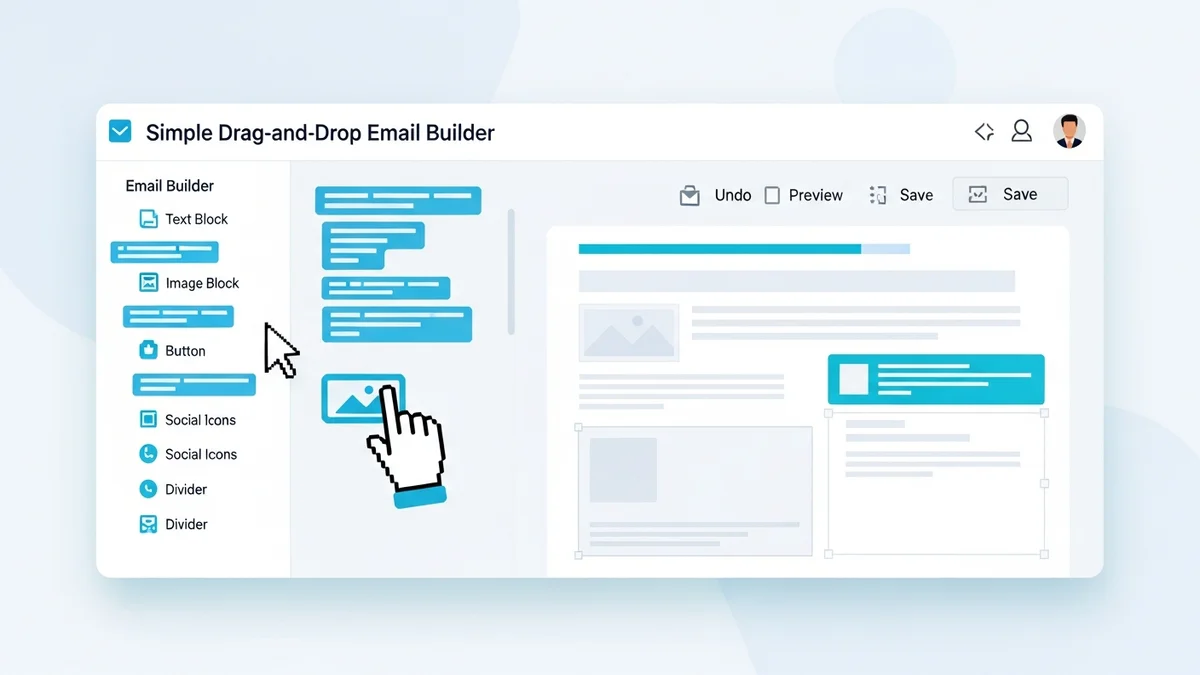
Mailchimp earned its reputation here, and it still deserves credit for it. The drag-and-drop email editor is genuinely one of the most intuitive in the industry. Navigation is logical, templates are plentiful, and even someone who has never sent a marketing email before can build and send a campaign within an hour. For a solo operator or small team without a dedicated marketing specialist, that frictionless experience has real value.
ActiveCampaign has historically had a steeper learning curve — and that reputation is partially still earned. The platform does more, and doing more means there are more menus, more settings, and more decisions to make. However, the AI assistant introduced in recent versions genuinely changes this equation. You can now describe an automation in plain language and have it built for you, which sidesteps much of the manual configuration that used to intimidate new users.
Newsletter
Get the latest SaaS reviews in your inbox
By subscribing, you agree to receive email updates. Unsubscribe any time. Privacy policy.
The honest summary: Mailchimp wins on day-one accessibility. ActiveCampaign wins on week-four productivity once you know where everything is.
Automation and AI: Where the Real Gap Lives
This is the section that should matter most to any serious email marketer, and it's where the gap between these two platforms is widest.
Mailchimp Automation
Mailchimp's "Customer Journey" builder offers a solid visual automation experience for standard use cases — welcome sequences, cart abandonment, re-engagement flows. For straightforward email automations, it works well. A/B testing is available but limited to subject lines and send times on most plans. It's good enough for a business that needs automation, but not a business that wants to build sophisticated, multi-path behavioral logic.
ActiveCampaign Automation
ActiveCampaign's automation builder is a different class of tool. You can build multi-path sequences that branch based on any combination of behavioral signals — email opens, link clicks, website visits, purchase history, CRM stage, lead score, and more. Multiple automation maps can be viewed simultaneously, which is invaluable when debugging complex sequences or planning a full customer lifecycle. SMS, WhatsApp, and website personalization can all be wired into the same automation flow.
AI Features in 2026
Both platforms have invested in AI, but ActiveCampaign's implementation is notably more comprehensive. The platform's AI assistant can generate complete multi-path automations, build complex audience segments from a plain-language description, and draft full email campaigns — not just subject line suggestions. Mailchimp offers generative text, AI-generated images, content optimization suggestions, and a handful of pre-built AI flows. Useful, but more limited in scope.
If AI-assisted content generation is a priority for your workflow, it's also worth looking at dedicated tools like Jasper or Copy AI, which are purpose-built for marketing copywriting and can complement either platform effectively.
Features Head-to-Head
| Feature | Mailchimp | ActiveCampaign |
|---|---|---|
| Email editor | Excellent drag-and-drop | Strong, slightly more complex |
| Marketing automation | Good for basic flows | Industry-leading depth |
| AI assistant | Basic generative features | Comprehensive — builds automations, segments, campaigns |
| CRM / deal pipelines | Limited | Full CRM (add-on) |
| Lead scoring | Not available | Available |
| SMS / WhatsApp | Not available | Available |
| Landing pages | Available | Available |
| Segmentation | Standard | Advanced behavioral segmentation |
| Reporting | Clear and accessible | More detailed, more options |
Integrations: ActiveCampaign Wins on Breadth
Mailchimp connects with 330+ third-party tools, which covers most common use cases — Shopify, WordPress, WooCommerce, and the major CRM platforms are all in there. For a business with a standard tech stack, this is perfectly adequate.
ActiveCampaign offers 1,000+ native integrations, though some of the more advanced connections are gated behind higher-tier plans. Both platforms connect with thousands of additional apps through Zapier, which effectively levels the playing field for power users willing to build custom workflows.
For cold outreach and lead generation workflows specifically, neither platform is really designed for that use case — you'd be better served by specialized tools like Instantly or Smartlead, which are purpose-built for high-volume cold email with deliverability infrastructure to match.
Who Each Tool Is Actually Built For
Choose Mailchimp if:
- You're new to email marketing and want to get campaigns running without a learning curve
- You're on a tight budget and need a functional free tier to start
- Your primary use case is straightforward newsletters or simple drip sequences
- You don't need a CRM, lead scoring, or multi-channel automation
- Design quality and template variety matter more to you than automation depth
Choose ActiveCampaign if:
- You've outgrown basic email broadcasts and need real behavioral automation
- You want to run email, SMS, and website personalization from a single platform
- Lead scoring and CRM deal pipelines are part of your sales process
- You want AI that can actually build automations, not just suggest subject lines
- You're managing a growing list (1,000+ contacts) where sophisticated segmentation pays dividends
The Bottom Line
Mailchimp is the better tool for getting started. ActiveCampaign is the better tool for growing a serious email marketing operation. That's not a slight against Mailchimp — it genuinely excels at what it's designed to do, and its free tier remains one of the most accessible entry points in the industry. But the businesses that tend to outgrow Mailchimp do so for a consistent set of reasons: they want more sophisticated automation, better segmentation, and tools that can evolve with their strategy rather than constraining it.
ActiveCampaign's $19/month starting price is higher, but the jump in capability — especially with the AI assistant now handling much of the automation-building complexity — makes it a compelling value for any business that treats email as a core growth channel rather than an occasional newsletter.
If you're somewhere in between — not quite ready for ActiveCampaign's complexity but finding Mailchimp limiting — it's worth exploring the full landscape of Mailchimp alternatives before committing to a migration. The right tool is ultimately the one your team will actually use to its full potential.