
Why AI Email Personalization at Scale Is No Longer Optional
Email marketing has always promised one-to-one communication delivered at one-to-many scale. For decades, that promise was largely fiction — "Dear [First Name]" was about as personal as it got. In 2026, that gap has finally closed. AI-powered personalization now makes it genuinely possible to send thousands of emails that each feel individually written, and the performance data makes a compelling case that doing anything less is leaving serious revenue on the table.
The core shift is this: traditional email personalization was rule-based and static. You could segment by industry or past purchase, but each recipient in a segment got the same email. AI personalization is dynamic and predictive. It analyzes behavioral signals, purchase history, engagement patterns, and intent data to assemble emails — content, subject lines, send times, offers — that are unique to each individual at the moment of send.
For teams still sending the same newsletter blast to their entire list, this represents both a threat and an opportunity. The threat: your competitors who are using AI personalization are almost certainly seeing dramatically better results. The opportunity: only 8% of B2B marketers report having an up-to-date AI tech stack, which means moving now still delivers a genuine competitive edge.
The Performance Data: What AI Personalization Actually Delivers
Skepticism about AI marketing claims is healthy — the space is full of vendor-inflated numbers. But the performance benchmarks for AI email personalization are unusually consistent across independent sources, which makes them worth taking seriously.
GetResponse's analysis of 4.4 billion emails found that AI-personalized campaigns achieve 44.30% open rates compared to 39.28% for generic sends. That 5-percentage-point gap sounds modest until you do the math across a list of 100,000 subscribers: it's 5,000 additional opens per send. Litmus reports dynamic email content drives 76% higher click-through rates, while Mailchimp's own research shows segmented campaigns generate 101% more clicks than non-segmented equivalents.
| Metric | AI-Personalized | Non-Personalized | Improvement |
|---|---|---|---|
| Open rate | 44.30% | 39.28% | +5 percentage points |
| Click-through rate | 3.84%+ | 2.00% | +76–101% |
| Conversion rate | 2.5–5.2% | 1.0–2.4% | +30–50% |
| Revenue per email | Up to 41% higher | Baseline | +41% |
The revenue impact is where things get genuinely interesting. AI-driven hyper-personalization produces a 41% revenue boost based on aggregated industry data. Automated email flows — which AI personalization depends on heavily — generate 37–41% of all email sales despite representing just 2% of total send volume. Tata Harper Skincare saw automated flow revenue increase 139% year-over-year after implementing AI-driven personalization. UK travel comparison site icelolly.com achieved a 201% CTR increase using dynamic content personalization, with conversion rates rising 45% simultaneously.
Overall, email marketing already delivers an average ROI of $36 for every $1 spent. AI personalization pushes that figure considerably higher for early adopters. The case for action is strong.
How AI Email Personalization Actually Works
Understanding the mechanics helps you evaluate tools intelligently and avoid being dazzled by feature lists that don't deliver real outcomes.
Predictive Segmentation
Traditional segmentation is retrospective — you group people based on what they've already done. AI segmentation is predictive — it groups people based on what they're likely to do next. Models trained on behavioral data can identify which subscribers are approaching a purchase decision, which are at churn risk, and which have high lifetime value potential, then trigger appropriate messaging for each group automatically.
Dynamic Content Assembly
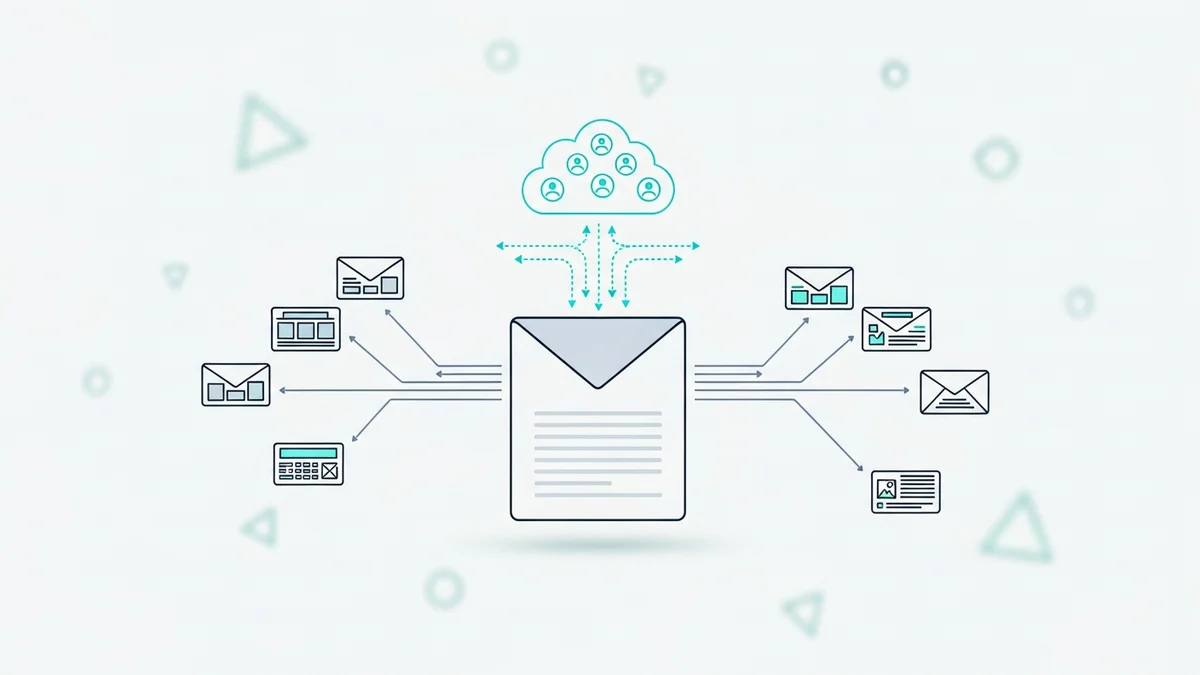
Rather than writing one email per segment, AI systems pull from a content library and assemble emails dynamically at send time. A single campaign template might produce thousands of unique emails, each with a different subject line variation, product recommendation, featured article, or call-to-action based on individual recipient data. Tools like ActiveCampaign have built conditional content blocks that let you define rules for what each subscriber sees without writing separate campaigns.
Newsletter
Get the latest SaaS reviews in your inbox
By subscribing, you agree to receive email updates. Unsubscribe any time. Privacy policy.
Send-Time Optimization
Open rates vary significantly by individual — some people check email first thing in the morning, others during a lunch break, others late at night. AI send-time optimization analyzes each subscriber's historical engagement patterns and delivers messages when that specific person is most likely to open. This alone typically adds 1–3 percentage points to open rates without changing a word of copy.
Subject Line and Copy Generation
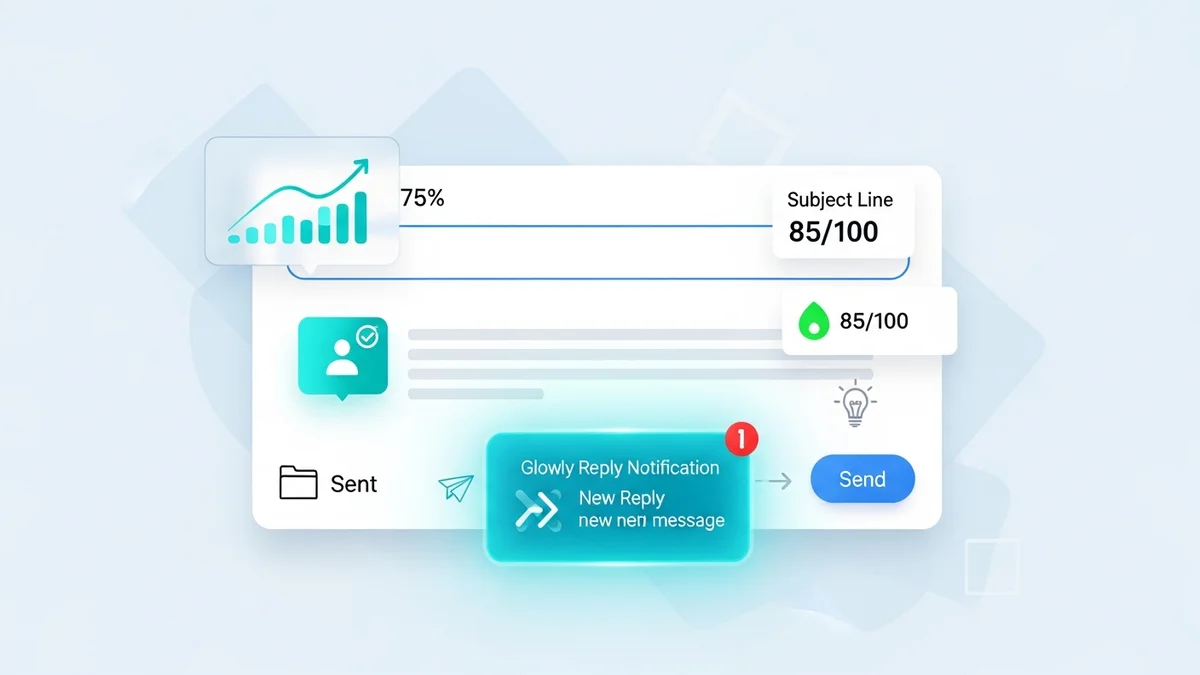
AI writing tools now generate and A/B test subject line variations at a scale no human team can match. Rather than testing two subject lines per campaign, AI systems can test dozens simultaneously, learning which linguistic patterns, emotional triggers, and formats resonate with different audience segments. Jasper and Copy.ai both offer email copywriting assistance that goes beyond simple generation — they can adapt tone and messaging to match audience context and campaign goals.
Behavioral Trigger Automation
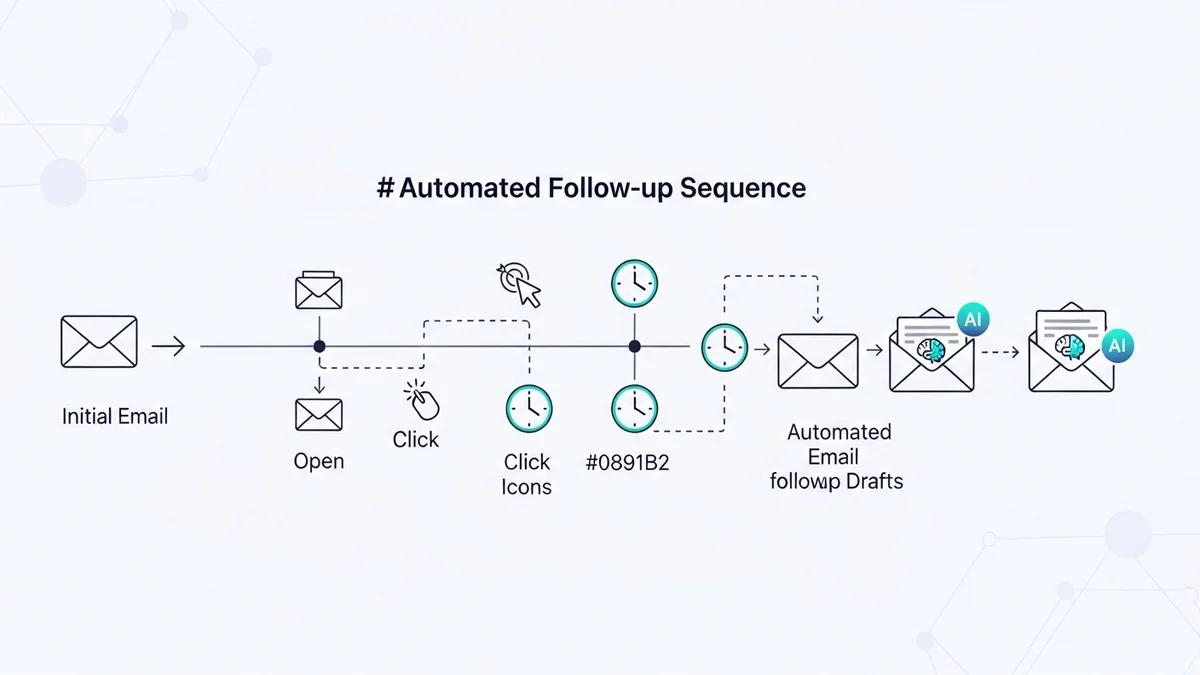
The highest-performing emails are typically triggered by specific subscriber behaviors — viewing a product page, abandoning a cart, reading a particular piece of content, or reaching a usage milestone in a SaaS product. AI systems monitor these signals continuously and fire the right message at the right moment, making timing precision a systematic capability rather than a manual task.
Choosing the Right Tools for Your Scale
The tools you need depend heavily on your list size, technical resources, and whether you're selling to consumers or businesses. Here's how to think through the landscape.
For High-Volume B2C and E-Commerce
E-commerce businesses with large subscriber bases need platforms that combine robust segmentation with dynamic product recommendations and tight integration with purchase data. Mailchimp has expanded its AI capabilities significantly, offering predictive demographics, customer lifetime value modeling, and product recommendation blocks that pull from your catalog automatically. For teams already on a dedicated e-commerce stack, the native integrations matter as much as the email features themselves.
ActiveCampaign goes deeper on the automation side — its conditional logic for behavioral triggers is genuinely more sophisticated than most competitors, making it a strong choice for businesses where the customer journey involves multiple touchpoints before conversion.
For B2B Outbound at Scale
B2B outbound personalization has its own requirements: you're personalizing based on company data, role, industry, and intent signals rather than purchase history. B2B email benchmarks remain strong — 7.38% click-to-open rates, 23% higher than B2C — but reaching them requires personalization that goes beyond name insertion.
Instantly and Smartlead are purpose-built for high-volume B2B cold outreach with AI personalization. Both handle deliverability infrastructure — inbox rotation, warm-up sequences, sending limits — while layering in AI-generated personalization variables that reference company-specific details. Lemlist takes a similar approach but adds multi-channel sequences and a strong emphasis on liquid syntax personalization that can dynamically insert research about each prospect.
For Individual Productivity and Inbox Intelligence
Not all AI email personalization happens at the campaign level. For sales reps and executives managing high-stakes individual conversations, tools like Superhuman bring AI assistance to the inbox itself — drafting replies, summarizing threads, and suggesting follow-ups based on conversation context. This is personalization at the one-to-one level rather than one-to-many, and it's increasingly important as buyers expect individual attention alongside automated campaigns.
Building an AI Personalization Stack: A Practical Implementation Framework
The biggest mistake teams make with AI email personalization is treating it as a tool purchase rather than a system build. Buying a sophisticated platform and continuing to send the same monthly newsletter doesn't move the needle. Here's a more effective approach.
Start With Data Infrastructure
AI personalization is only as good as the data feeding it. Before evaluating tools, audit what behavioral data you're actually capturing. Do you know which pages subscribers visited before signing up? Which emails they opened and clicked? What they've purchased and when? If your data is fragmented across systems that don't talk to each other, the first investment should be in connecting those systems, not in buying a more sophisticated email tool.
Implement Behavioral Triggers Before Broadcast Personalization
Automated triggered flows — despite representing only 2% of send volume — generate 37–41% of email-attributed revenue. The highest-ROI first step is almost always to implement proper abandoned cart, post-purchase, and win-back flows with dynamic content, not to personalize your monthly newsletter. Get the triggers right first; broadcast personalization can come later.
Test Systematically, Not Randomly
AI tools make it easy to run many tests simultaneously, which can become chaotic without a structured testing roadmap. Prioritize tests by potential impact: subject line variations affect every subscriber and are worth testing continuously. Content block variations affect engaged subscribers and are worth testing monthly. Send-time optimization is worth running as a persistent background process once your list exceeds 10,000 subscribers.
Measure Revenue Impact, Not Vanity Metrics
Open rates and click rates are useful diagnostics, but they're not the goal. Build attribution models that connect email engagement to revenue, even if that means accepting some attribution ambiguity. Teams that optimize for open rates often make decisions that hurt conversion rates — urgent, clickbait-adjacent subject lines get opened but don't convert. The only metric that ultimately matters is revenue per email sent.
The Competitive Window Is Narrowing — Here's Why That Matters
The data point that should drive urgency: 70% of marketers expect half of all email operations to be AI-driven by the end of 2026, yet only 8% of B2B marketers currently have an up-to-date AI tech stack. This gap is temporary. The performance advantages of AI personalization are becoming common knowledge, and adoption will accelerate.
Teams that build sophisticated AI personalization systems now will benefit in two ways. First, they'll accumulate proprietary training data that makes their systems smarter over time — behavioral models trained on your specific audience outperform generic models. Second, they'll develop the internal expertise and processes that make the technology actually work, which takes longer to build than most teams expect.
The goal isn't to automate email marketing — it's to make every email feel less automated to the person receiving it. That's the promise AI personalization makes good on when implemented thoughtfully. The benchmarks are real, the tools have matured, and the competitive window for early-mover advantage is still open — but not for much longer.