
Why AI Has Made Email Deliverability Harder — Not Easier
Here is the uncomfortable truth about email in 2026: AI made it dramatically easier to send, and dramatically harder to land. McKinsey's 2025 GTM report projects that 70% of outbound communication will be AI-generated by 2026, with teams scaling send volume 5–20x faster than before. Mailbox providers saw this coming. Google, Yahoo, and — as of May 2025 — Microsoft Outlook have all tightened bulk sender requirements in direct response to the AI content flood.
The result? Companies without solid deliverability infrastructure are watching reply rates drop 40–80% even as they send more. Volume without infrastructure is not a strategy; it is domain suicide.
This guide covers what actually works in 2026: the technical requirements you cannot skip, the AI-assisted tools that give you a real edge, and the engagement principles that separate senders who land in primary from those who get quietly junked.
The Non-Negotiable Technical Foundation
Before any AI tool can help you, your technical house must be in order. This is the floor, not the ceiling. Google and Yahoo enforced these standards first; Microsoft followed in 2026 for Outlook.com consumer mailboxes. Miss any of these and you are not competing — you are filtered before the conversation starts.
SPF, DKIM, and DMARC Alignment
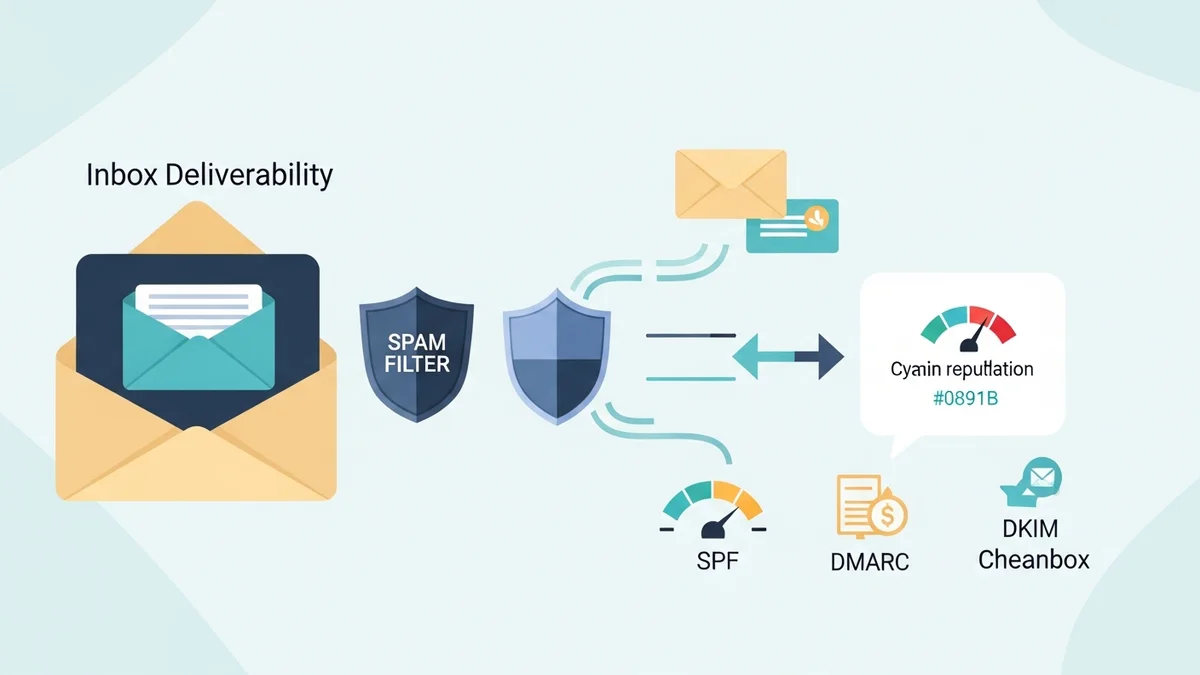
These three authentication protocols are now table stakes for any bulk sender. SPF tells receiving servers which IPs are authorized to send on behalf of your domain. DKIM cryptographically signs messages to prove they haven't been tampered with. DMARC ties them together with a policy — reject, quarantine, or monitor — and gives you visibility into who is spoofing your domain.
The critical word here is alignment. Having all three records set is not enough. The domains in your From header, SPF record, and DKIM signature must align. Misalignment is one of the most common causes of otherwise-compliant senders hitting spam folders, and it is something most senders never check after initial setup.
Beyond initial configuration, you need to monitor these records continuously. DNS changes, new sending services, and ESP migrations can silently break alignment. A DMARC aggregate report that shows sudden DKIM failures is worth catching in week one, not month three.
RFC 8058 One-Click Unsubscribe
Google and Yahoo require RFC 8058 one-click unsubscribe for all marketing emails. This is not the same as having an unsubscribe link in your footer — it is a machine-readable header that lets mailbox clients surface a single-click opt-out directly in the inbox interface. Senders who skip this face throttling and spam folder placement, full stop.
The complaint threshold that matters: keep spam complaints under 0.3% and bounces under 2%. Exceed either and your reputation degrades fast. Tools like Instantly auto-pause accounts that breach these thresholds before they cause lasting domain damage — a feature that sounds minor until you watch a single runaway campaign torch a domain you spent months warming.
How AI Filtering Actually Works in 2026
Mailbox providers are not running simple keyword filters anymore. AI-assisted filtering in 2026 evaluates content quality, tone, historical sender patterns, and engagement behavior as a composite signal. This matters because it changes where you should invest your optimization effort.
The old playbook was about avoiding spam trigger words and keeping image-to-text ratios in line. The new reality is that a technically perfect email with irrelevant content and zero engagement history will still land in spam — because the filter has learned that your audience ignores you. Engagement is the leading deliverability driver going into 2026. Opens, clicks, replies, forwards, and users moving your email out of spam all feed the inbox placement algorithm positively. Deletions without reading, long-term inactivity, and complaint rates feed it negatively.
This creates a compounding dynamic: senders with high engagement earn better inbox placement, which drives more engagement, which further improves placement. Senders with low engagement face the reverse spiral. AI filtering does not just respond to what you send — it responds to what your audience does with it.
The practical implication is that low-engagement segments drag down domain reputation even when those contacts technically opted in and your authentication is clean. Sending to a ghost list is not neutral. It actively damages your standing with every mailbox provider that observes your traffic.
The Five Pillars of Deliverability Success
1. Permission and Consent
Good deliverability starts at signup, not at send time. Transparent opt-in experiences — ones that clearly state frequency and value — produce subscribers who actually want to hear from you. Contrast this with silent opt-ins buried in checkout flows or consent bundled into gated content downloads. Those contacts convert at acquisition and punish you with disengagement and complaints for every month after.
Newsletter
Get the latest SaaS reviews in your inbox
By subscribing, you agree to receive email updates. Unsubscribe any time. Privacy policy.
For high-stakes lists or regulated verticals, double opt-in is worth the drop in signup volume. The subscribers who confirm are meaningfully more engaged, and that engagement compounds into better inbox placement over time. The math works in your favor even before you account for the complaint reduction.
2. Reputation and Authentication
Authentication earns the right to compete. Engagement wins the inbox. Sending from a branded domain rather than a generic ESP subdomain matters more now that providers treat domain age and history as reputation signals. Consistent sender identity — same From name, same sending domain, predictable patterns — gives providers fewer reasons to scrutinize your traffic.
3. Engagement Quality Over Volume
This is the hardest cultural shift for teams that grew up optimizing send volume. In 2026, sending fewer emails to more engaged subscribers outperforms sending more emails to a mixed list. Segment ruthlessly. Suppress contacts who haven't engaged in 90 days before you suppress them forever — one re-engagement campaign to identify the genuinely dormant, then removal.
4. List Hygiene and Data Health
Purchased lists are a trap. Third-party data performs worse than first-party data in every metric that matters for deliverability, and the bounce rates and complaint rates they generate damage your domain reputation for the subscribers you legitimately earned. Verify lists before sending, especially for cold outreach. Target a bounce rate under 2% per campaign — the same threshold Google and Microsoft now enforce for bulk senders.
5. Content Relevance and Quality
AI content generation has commoditized copywriting. The differentiator is no longer whether you can produce email copy — it is whether that copy is genuinely relevant to the recipient. Personalization at the segment level is minimum; personalization at the individual level is the real bar. Tools that help you write relevant, human-feeling emails at scale — rather than just fast emails — are the ones worth investing in.
AI Tools That Actually Move the Needle on Deliverability
Not every AI email tool improves deliverability. Some accelerate the volume problem. Here is an honest look at what different tool categories deliver and what to expect from them in practice.
| Tool | Primary Deliverability Feature | Key Metric / Threshold | Best For |
|---|---|---|---|
| Instantly | Automated warmup, inbox placement tests, auto-pause on threshold breach | Targets 80%+ inbox placement; auto-pauses at 0.3% complaint rate | Cold outreach agencies and high-volume prospecting |
| Smartlead | Multi-channel warmup, blacklist monitoring, sender rotation | Warm new domains starting at 5–10 emails/day over 4–6 weeks | Agencies managing multiple client domains |
| Lemlist | Deliverability score monitoring, personalized image/video to boost engagement signals | Engagement-driven inbox placement improvement | Outbound teams focused on reply rate over raw volume |
| ActiveCampaign | Engagement-based segmentation, automated list hygiene workflows | Suppresses non-openers to protect sender reputation | Marketing automation with existing warm audiences |
| Mailchimp | Spam filter preview, send-time optimization, bounce management | Automatically unsubscribes hard bounces; monitors complaint trends | SMBs sending to opted-in marketing lists |
The honest assessment: Instantly and Smartlead are purpose-built for the cold outreach deliverability problem — warmup, rotation, threshold monitoring, and placement testing in a single platform. If you are running cold outreach at scale, there is no substitute for a tool that treats deliverability as a first-class feature rather than an afterthought.
For inbound marketing teams with warm lists, ActiveCampaign's engagement segmentation is genuinely valuable. Its automation workflows let you build suppression logic that protects your domain reputation without manually managing re-engagement campaigns every quarter.
Domain Warmup: The Step Most Senders Skip
New domains have zero reputation. Sending at volume from day one is the single fastest way to destroy a domain permanently. The correct warmup protocol in 2026 starts at 5–10 emails per day and scales gradually over 4–6 weeks, maintaining consistent daily volumes that build sender reputation without triggering automated pattern detection.
Why does this matter more in 2026 than it did two years ago? Because Google, Yahoo, and now Microsoft are specifically flagging automated sending patterns as a risk signal. A new domain that sends 500 emails on day one looks like a spam operation regardless of content quality. The same domain that reaches 500 daily sends after six weeks of consistent growth looks like a legitimate business scaling its outreach.
Warmup services work by generating real engagement signals — actual replies and interactions with seed inbox networks — that teach mailbox providers to trust your domain before you send to your real audience. The distinction matters: warmup services that only use fake engagement loops without actual mailbox interaction are less effective and increasingly detectable. Providers like Instantly use networks of real mailboxes for this reason.
A separate sending infrastructure for cold outreach and transactional email is also worth considering. Using the same domain for cold prospecting and customer receipts means a cold outreach deliverability problem can ripple into your transactional email — which is how you end up with customers not receiving password resets because your sales team ran a bad campaign.
Monitoring, Testing, and Staying Ahead of Filter Changes
Deliverability is not a setup-and-forget configuration. Filters evolve, sender behavior changes, and list quality degrades over time. The senders who maintain 80%+ inbox placement do it through continuous monitoring, not one-time optimization.
Inbox Placement Testing
Inbox placement tests send your actual email through seed accounts at major mailbox providers — Gmail, Outlook, Yahoo — and report where it landed: primary inbox, promotions, spam, or rejected entirely. Run these before major campaigns and after any significant content or sending pattern changes. A drop in placement scores at a specific provider is a diagnostic signal, not just a bad number.
Blacklist Monitoring
Being listed on a major blacklist like Spamhaus or Barracuda is an immediate deliverability crisis. Most senders discover they are blacklisted by noticing a campaign performed badly, which means the damage is already done. Automated blacklist monitoring — available in tools like Instantly and Smartlead — catches listings within hours rather than weeks.
Engagement-Based Segmentation as Ongoing Practice
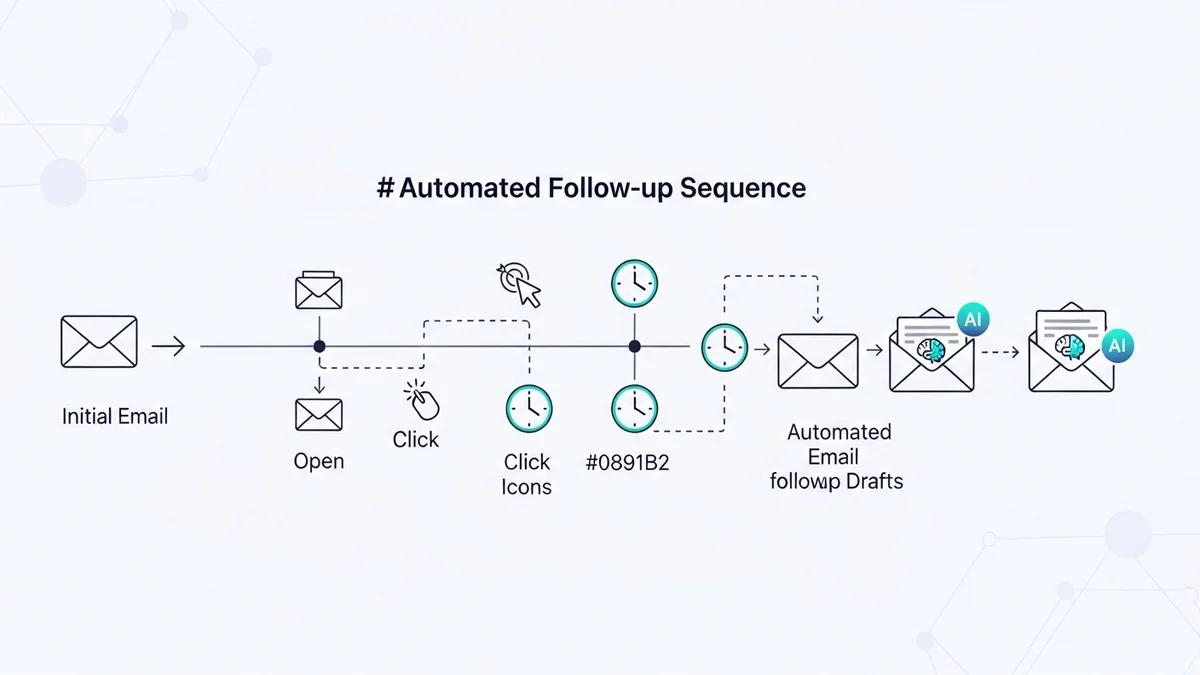
Build suppression logic into your regular sending cadence, not just your re-engagement campaigns. Contacts who have not opened in 90 days should move to a lower-frequency track. Contacts who have not opened in 180 days should be sunset unless you have a clear path to re-engagement. This is not list shrinkage — it is reputation protection. A smaller list that engages is worth more than a large list that does not, in every metric that matters for deliverability and revenue.
The teams that win in 2026 are not the ones sending the most. They are the ones landing the most — consistently, in primary inboxes, to audiences that actually wanted to hear from them. That requires treating deliverability as infrastructure, not as an afterthought you revisit when open rates fall. The investment in technical compliance, clean lists, and smart tooling pays dividends in every campaign that follows.