
The State of AI Email Marketing in 2026: What's Actually Changing
Email marketing has always been the channel that refuses to die. With an average 36:1 ROI, according to Litmus research, it continues to outperform virtually every other digital marketing channel year after year. But 2026 is shaping up to be a genuine inflection point — not because email is changing, but because AI is finally mature enough to change how we use it at every layer of the stack.
This isn't another post about AI writing subject lines. The trends hitting inbox strategies in 2026 go much deeper: autonomous lifecycle automation, privacy-resistant measurement frameworks, AI-powered deliverability, and a fundamental rethinking of what "personalization" actually means. Here's what the data and the industry's leading practitioners are saying is coming — and what you should be doing about it right now.
1. AI Moves Beyond Content Generation Into Full Campaign Orchestration
For the past two years, most marketers have used AI narrowly: generating subject line variations, rewriting body copy, or suggesting CTAs. That phase is essentially over. According to Luke Glasner, Director of Email Deliverability at ZeroBounce, "2026 will be the year AI moves into more areas of email. So far we've seen mass adoption in the industry for creative production, dynamic content, and analytics/reporting." The next wave moves into campaign architecture itself.
What Campaign Orchestration Actually Looks Like
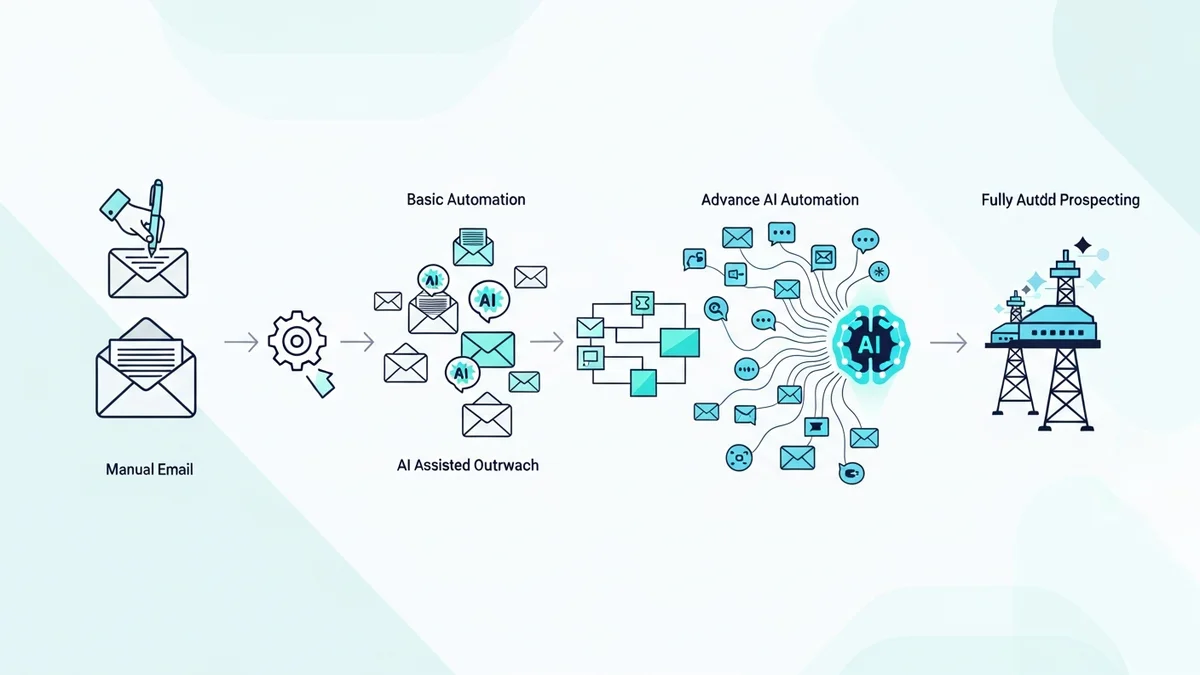
AI-native platforms are now beginning to handle not just what gets written, but when an email sends, to whom, through which send domain, and how to adapt the next message based on behavioral signals. Tools like ActiveCampaign have been building toward this with their predictive sending and machine learning-powered segmentation, while outbound-focused platforms like Instantly and Smartlead are applying AI to warm-up sequences and sender reputation management at scale.
The shift matters because it changes the marketer's job. You're no longer writing campaigns — you're training systems. That requires a different skill set and a different relationship with your email platform. The teams winning in 2026 are the ones who treat their AI tools like junior colleagues who need direction and correction, not magic boxes that produce output on demand.
Generative AI for Time Savings: The Honest Picture
Litmus identified generative AI for content creation and time savings as one of the defining trends for this period. But the honest framing matters: AI saves time on production, not strategy. Generating ten subject line variants in 30 seconds is useful. Knowing which variant will resonate with your specific segment requires human judgment informed by historical performance data. The marketers who treat AI as a production accelerator — while keeping strategy, tone, and audience judgment in human hands — are outperforming those who've fully delegated creative decisions to the model. Tools like Jasper and Copy.ai are genuinely useful here, but they reward strategic direction, not abdication.
2. Privacy-Proofing Is No Longer Optional — It's Infrastructure
Apple's Mail Privacy Protection (MPP) changed open rate measurement permanently when it launched. But that was just the opening act. The European AI Act came into force in August 2024, and regulators globally are now developing AI-specific data frameworks that will affect how email marketing platforms collect, store, and act on behavioral data. GDPR and CCPA reshaped the last decade. AI-specific legislation will reshape the next one.
What Privacy-Proofing Requires in Practice
The marketers who are ahead of this curve have already shifted their measurement philosophy. Instead of relying on open rates as primary engagement signals (unreliable post-MPP), they're building composite engagement scores based on clicks, conversions, reply rates, and downstream revenue attribution. This is harder to set up, but it's also more accurate — MPP inflated open rates artificially, and many teams were optimizing against a metric that was increasingly disconnected from real engagement.
On the data side, first-party data collection is no longer a "nice to have" — it's the foundation of the entire personalization stack. Preference centers, progressive profiling, and zero-party data collection (asking subscribers directly what they want) are replacing the implicit behavioral tracking that regulators are squeezing. The platforms that make first-party data collection seamless will have a structural advantage throughout the 2026-2028 regulatory cycle.
3. Lifecycle Email Automation Gets Genuinely Intelligent
Lifecycle automation — welcome sequences, re-engagement campaigns, post-purchase flows, churn prevention — has existed for years. What's changing in 2026 is the intelligence layer sitting on top of those sequences. Static "if opened email 3, send email 4" logic is being replaced by models that evaluate subscriber trajectory and adjust messaging, timing, and offer structure accordingly.
Newsletter
Get the latest SaaS reviews in your inbox
By subscribing, you agree to receive email updates. Unsubscribe any time. Privacy policy.
The Segments That Matter Most
Litmus flagged lifecycle email automation as a primary trend area, and the reason is straightforward: the biggest revenue gains aren't in acquiring new subscribers, they're in converting and retaining the ones you already have. Brands that have mature lifecycle programs report dramatically higher customer lifetime value than those still sending broadcast campaigns to unsegmented lists.
The AI component matters most at the edges of lifecycle behavior — identifying the early signals of churn before the subscriber goes fully dark, or recognizing the behavioral patterns that predict high-value conversion and accelerating those subscribers through the funnel. ActiveCampaign's predictive content and contact scoring features are designed exactly for this use case, and they're becoming table stakes rather than differentiators in 2026.
Newsletters as Retention Infrastructure
One of the more interesting lifecycle trends Litmus identified is the rise of newsletters as a retention tool — not just for media companies, but for product and SaaS brands. A well-executed newsletter keeps your brand in the subscriber's regular attention rotation without requiring a transactional reason to reach out. It builds the relationship infrastructure that makes promotional emails more effective when you do send them. This is a long-game play that many teams are underinvesting in because the attribution is harder to measure. That's exactly why it's a competitive opportunity right now.
4. Deliverability Becomes an AI Arms Race
Email deliverability has always been part technical, part relationship management with inbox providers. In 2026, AI is on both sides of the equation. Senders are using AI to optimize send patterns, warm up infrastructure, and identify list hygiene issues before they become reputation problems. Inbox providers are using increasingly sophisticated AI to detect and filter low-quality sending — and the signals they're reading go far beyond traditional spam triggers.
What the New Deliverability Landscape Rewards
The fundamentals haven't changed — send to people who want your emails, honor unsubscribes instantly, maintain clean lists. What's changed is the granularity at which inbox providers evaluate sender reputation. Engagement signals at the individual recipient level matter more than aggregate list metrics. A list of 50,000 highly engaged subscribers will consistently outperform a list of 500,000 marginally engaged ones, and the gap is widening as AI-driven filtering gets more sophisticated.
Platforms built specifically for cold outreach, like Instantly and Smartlead, have built their core value propositions around navigating this landscape — AI-driven warm-up, sender rotation, and deliverability monitoring. For teams doing high-volume outbound, these are no longer optional capabilities. They're entry requirements for staying in the inbox.
List Hygiene and Validation
ZeroBounce's Luke Glasner specifically called out AI improvements in deliverability infrastructure for 2026. Real-time email validation, predictive bounce prevention, and AI-powered list segmentation based on engagement trajectory are all becoming standard features rather than premium add-ons. The cost of ignoring list hygiene — in damaged sender reputation and lost deliverability — is now higher than the cost of the tools that prevent those problems.
5. Personalization at Scale: The Gap Between Promise and Execution Closes
Personalization has been a marketing buzzword for so long that it's easy to be cynical about it. But the gap between what personalization claims to do and what it actually delivers has historically been significant. Inserting a first name into a subject line is not personalization. Sending the same promotional email to everyone on your list with slightly different imagery is not personalization. In 2026, AI is finally enabling the kind of personalization that actually affects behavior: content, offer, timing, and channel all adapted to individual subscriber signals.
Segmentation and Cross-Functional Data
Litmus identified enhanced segmentation and cross-functional collaboration as a defining trend, and the cross-functional element is worth underscoring. The best email personalization in 2026 is drawing on data that lives outside the email platform — purchase history from the e-commerce system, support ticket data from the CRM, product usage data from the application layer. Email teams that are siloed from these data sources are working with one hand tied behind their back.
The platforms enabling this kind of cross-functional data activation — where email behavior is connected to the full customer data picture — are where the biggest personalization gains are happening. This is one of the reasons enterprise-tier email platforms are pulling ahead of simpler tools: data integration depth is increasingly the differentiator, not template quality or send volume capacity.
Interactivity: Raising the Engagement Ceiling
Interactive email elements — polls, surveys, carousels, in-email forms — have been technically possible for years but inconsistently supported across clients. Support is improving, and AI is making interactive elements easier to produce and test. The strategic case for interactivity is clear: any engagement that happens inside the email rather than requiring a click to a landing page reduces friction and increases conversion rates. Litmus identified interactivity as a meaningful trend for this period, and the brands experimenting with it now are building a playbook that will be mainstream within 18 months.
Key Trends at a Glance: 2026 AI Email Marketing Landscape
| Trend | Maturity Stage | Primary Benefit | Adoption Barrier |
|---|---|---|---|
| AI Campaign Orchestration | Early Mainstream | Reduced manual campaign management time | Requires clean, integrated data |
| Privacy-First Measurement | Urgent / Regulatory-Driven | Accurate engagement data post-MPP | Attribution complexity |
| Intelligent Lifecycle Automation | Mainstream | Higher LTV, lower churn | Setup investment |
| AI-Powered Deliverability | Table Stakes for Outbound | Inbox placement at scale | Ongoing monitoring required |
| True Cross-Channel Personalization | Emerging | Higher conversion rates | Cross-functional data access |
| Interactive Email Elements | Early Adopter | In-email conversion, reduced friction | Client support inconsistency |
What This Means for Your Email Stack in 2026
The through-line connecting all of these trends is the same: email marketing is becoming a systems discipline, not just a content discipline. The teams winning in 2026 are the ones who have invested in their data infrastructure, their platform integrations, and their measurement frameworks — not just their creative quality.
That doesn't mean creative quality doesn't matter. It absolutely does. But a beautifully written email sent to the wrong segment at the wrong time through a degraded sending domain will underperform a well-timed, accurately targeted plain-text message. The fundamentals are being amplified by AI, not replaced by it.
For teams evaluating their stack, the questions worth asking right now are: Does your ESP give you visibility into individual-level engagement signals? Can you connect your email platform to your CRM and e-commerce data without a major engineering lift? Does your outbound infrastructure have AI-driven warm-up and deliverability monitoring built in? If the answer to any of these is no, you're leaving performance on the table — and the gap between where you are and where the best-performing teams are will widen throughout 2026.
Whether you're running high-volume outbound sequences with Lemlist, managing complex B2C lifecycle programs with ActiveCampaign, or scaling your newsletter with AI-assisted content production using Jasper, the investment thesis for AI email tooling has never been clearer. The 36:1 ROI that email has historically delivered is available to the teams who build the systems to capture it — and increasingly, those systems are AI-native from the ground up.