
Cold Email in 2026 Is Not What You Think It Is
If you are still thinking about cold email as a numbers game — send more, get more replies — you are already behind. The shift that happened between 2024 and 2026 is not incremental. It is structural. The entire stack that powers outbound email has been rebuilt around AI, and the teams still running template-blasting campaigns are seeing open rates collapse while their more adaptive competitors are reporting 40% higher engagement from predictive timing alone.
This is not a hype piece. The research from early 2026 is clear: cold email is not dying. In fact, average cold email open rates hit 40% in 2025 — a number that would have seemed optimistic five years ago. But achieving those numbers requires a fundamentally different approach to infrastructure, personalization, and tooling than what worked even eighteen months ago.
This guide breaks down exactly what has changed, what tools are winning, and what a high-performance outreach stack looks like in 2026.
Why Traditional Cold Email Approaches Are Failing
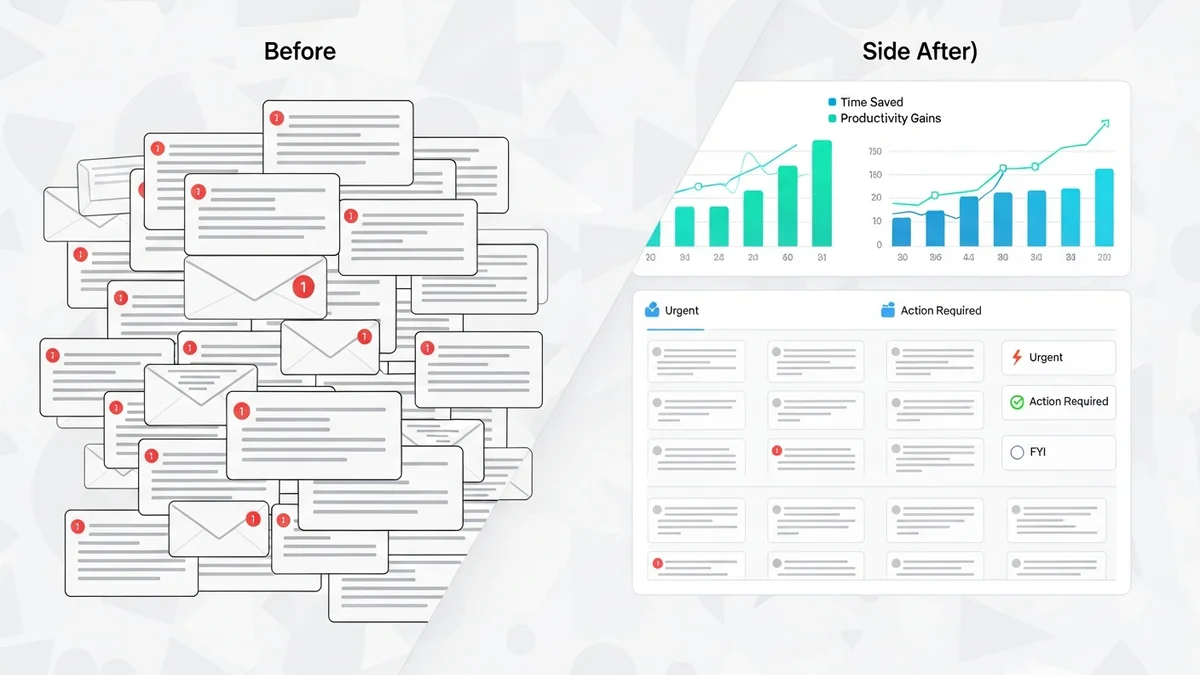
The old model had three layers: a contact database, a sequencer, and a copywriter. You found leads, loaded them into a drip sequence, wrote a template with a first-name variable, and hoped for the best. This approach is not just underperforming — it is actively damaging. Google and Microsoft's 2026 deliverability algorithms now detect abnormal sending volumes, repetitive content duplication, and cold domain patterns faster than ever before. Running a 2021-era outreach playbook in 2026 is a reliable way to get your domain flagged.
The Fragmentation Tax
The deeper structural problem was the "Franken-stack" — a term that has become common shorthand in the industry. For years, the standard GTM architecture stitched together Apollo for data, Vidyard for video, Zapier for automation, and a separate sequencer on top. Every handoff between tools introduced data latency, sync failures, and manual reconciliation work. The Total Cost of Ownership for these fragmented stacks was far higher than teams realized, and the operational friction cost was measured in missed reply windows and stale data.
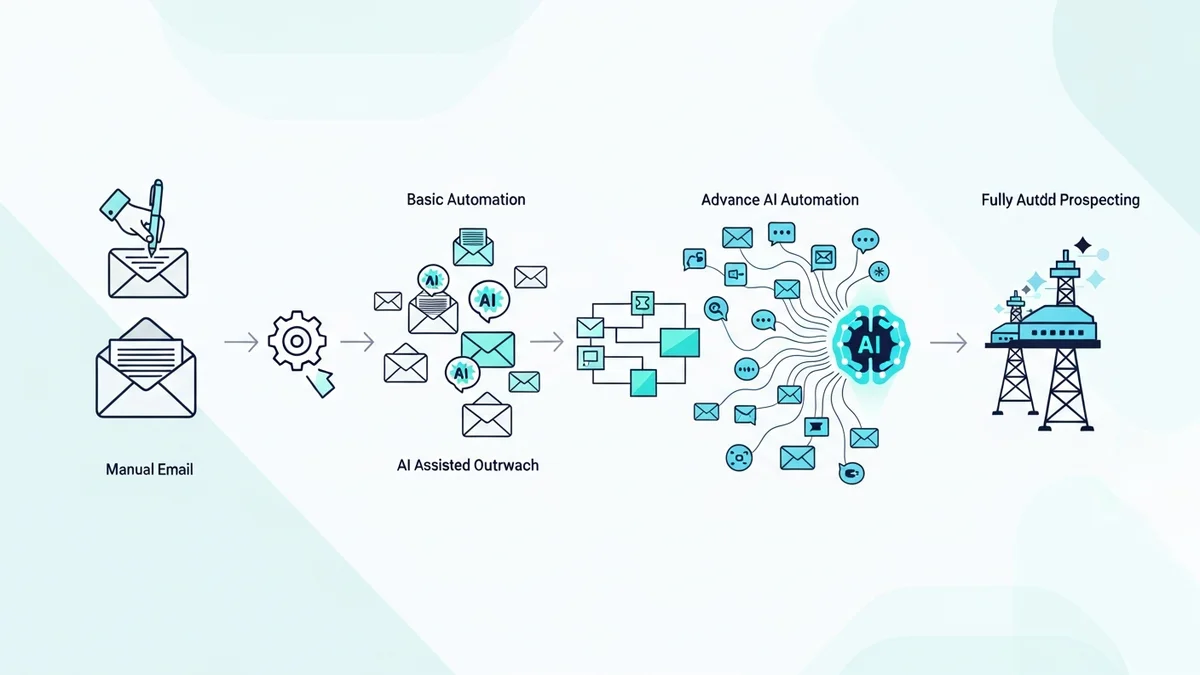
The market has responded by consolidating. The platforms winning in 2026 are not point solutions — they are operating systems for outbound, combining data enrichment, AI writing, sequencing, and deliverability infrastructure under one roof.
How AI Has Redefined Personalization at Scale
The {{firstName}} era is definitively over. Not because personalization stopped mattering — it matters more than ever — but because what counts as personalization has been redefined entirely.
Beyond Name-and-Company Variables
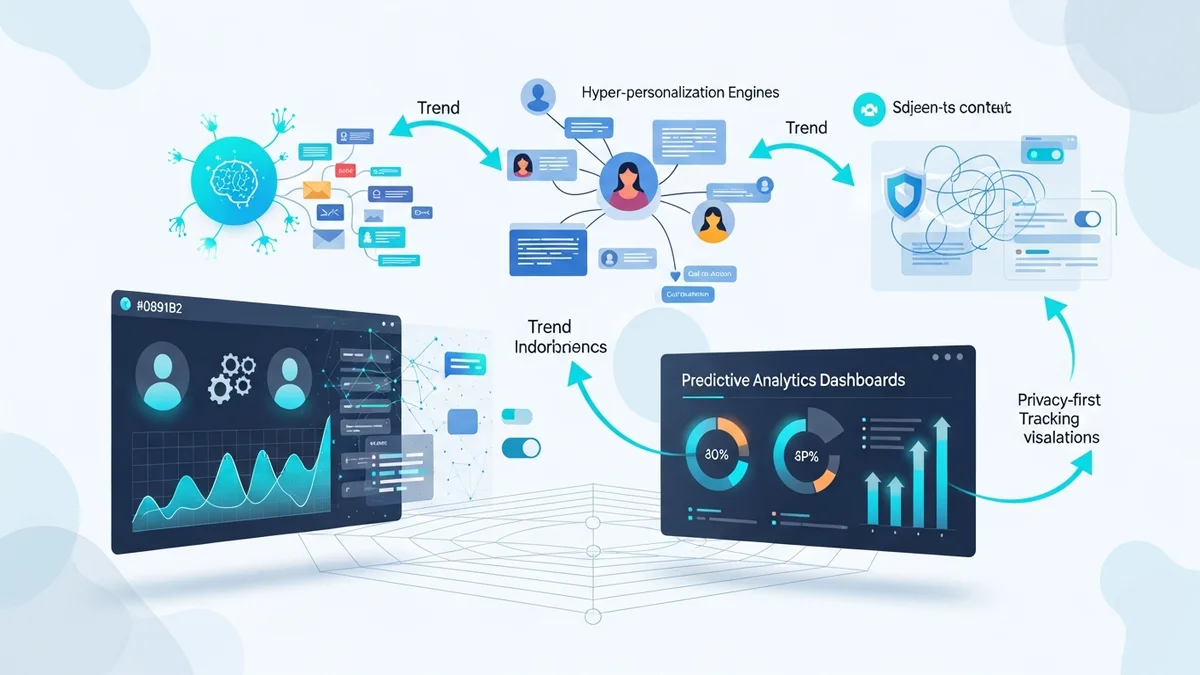
In 2026, AI personalization engines pull from behavioral data, purchase history, recent LinkedIn activity, job change signals, funding announcements, and real-time context like location-based events. The output is not a template with blanks filled in. It is a message that could plausibly have been written by a human who spent twenty minutes researching that specific prospect. The practical example: "It looks like your team in Austin has moved recently — here's a 2-step email automation to handle new client leads effortlessly." That level of contextual specificity is generated automatically at scale.
This is the core value proposition of AI SDRs. The problem that plagued outbound for years was a genuine trade-off: you could send 500 generic emails or 10 deeply researched ones, but not both. AI SDRs dissolve that constraint. They automate the deep research — company news, pain points, trigger events — and translate it into unique emails that feel one-to-one. The result is personalization at the volume that outbound requires to generate pipeline.
Predictive Send Timing
Send-time optimization has matured from a nice-to-have into a core capability. Platforms like Instantly and LemList now analyze historical engagement data per-prospect to identify individual activity windows. Campaigns using predictive timing are reporting 40% higher engagement in 2026 — not a marginal lift, but a structural improvement that compounds across sequences.
The implication is that two identical emails sent at different times can perform dramatically differently. AI-driven send-time prediction is now table stakes for any serious outreach operation.
Deliverability: The Battleground No One Talks About Enough
Deliverability is not a configuration step you complete once. In 2026, it is an ongoing operational discipline that determines whether your carefully crafted, AI-personalized messages ever reach a human inbox or disappear into a spam folder.
Domain Warmup and Infrastructure
The minimum viable approach to domain warmup is two to three weeks before any campaign touches cold prospects. Neural learning warmup tools like Mailreach, Warmbox, and Folderly 2.0 have moved beyond simple inbox-to-inbox interactions and now generate positive engagement signals that actively build domain reputation. The key principle: your sending infrastructure needs to look like a person, not a machine.
Newsletter
Get the latest SaaS reviews in your inbox
By subscribing, you agree to receive email updates. Unsubscribe any time. Privacy policy.
DNS hygiene — properly configured SPF, DKIM, and DMARC records — is non-negotiable. Platforms like Smartlead have built their entire market position around infrastructure-first deliverability, with unlimited mailbox rotation that lets agencies scale without concentration risk on any single domain. This specialization matters: when your domain is healthy, you are competing on message quality. When it is not, nothing else matters.
Content Patterns That Trigger Filters
Beyond infrastructure, the content itself signals intent to modern filtering algorithms. Repetitive phrasing, promotional structures, and templated sentence patterns are now caught at the algorithmic level. This is another argument for genuine AI personalization over template-based approaches — messages with meaningful variation are structurally less likely to be caught by spam filters, independent of their technical deliverability setup.
The 2026 Tool Landscape: What Is Actually Working
The market bifurcation visible in G2 and Capterra reviews for 2025-2026 tells an interesting story. Reviewers are increasingly penalizing tools that rely solely on text templating, while platforms integrating generative media and human-in-the-loop automation are seeing surging satisfaction scores. The winners are not necessarily the oldest platforms or the cheapest ones — they are the platforms that solved the fragmentation problem.
| Platform | Primary Strength | G2 Rating (2025-2026) | Best For |
|---|---|---|---|
| Instantly | Volume scaling + warmup infrastructure | 4.8/5 | High-volume senders who need deliverability at scale |
| Smartlead | Unlimited mailboxes, agency API | Top-tier (G2 2025-2026) | Agencies running multi-client campaigns |
| Lemlist | Personalization + multichannel sequences | High-rated (G2 2025-2026) | Teams prioritizing personalized multimedia outreach |
| ActiveCampaign | Automation depth + CRM integration | High-rated (G2 2025-2026) | Teams needing outreach tied to full customer lifecycle |
One honest observation: the all-in-one consolidation trend has a real downside. Platforms that do everything rarely do any single thing as well as a dedicated specialist tool. The right choice depends on whether your team's biggest bottleneck is data quality, deliverability, personalization, or sequencing logic.
Interactive Email Formats
One of the more surprising developments in 2026 is the rise of interactive elements inside cold emails themselves. Embedded polls, quiz-style CTAs, and instant booking snippets are generating up to 50% higher engagement compared to static links, according to campaign data from early 2026. The example that circulates in outreach communities is a simple two-button CTA: "Would you like a 10-minute audit or a free performance report?" — both options creating micro-commitment from the recipient before they have even left the email client.
Tools like Mailmodo and Stripo have made AMP-powered interactive emails technically accessible without requiring custom development, and critically, without the deliverability penalties that earlier implementations suffered.
The Emerging Factor: Voice and Trust Signals
Writing for Voice-Assisted Reading
This one caught most outreach practitioners off guard. In 2026, a meaningful percentage of emails are being summarized or read aloud by voice assistants — Google Voice, ChatGPT Voice, Siri Mail. That changes what "a good email" sounds like, literally. Long introductions that read fine on screen become awkward when played back verbally. The practical guidance: lead with value in the first three lines, write conversationally, and test subject lines for how they sound out loud, not just how they look in a preview pane.
Credibility Elements in the Signature
The footer of a cold email is no longer wasted space. Research from 2026 shows that a clean, branded signature with credibility signals — verified domain email, company logo, a case study link, a Google Reviews badge — improves trust and reply rates by 18%. The mechanism is simple: modern recipients verify before they engage. A Gmail address from a stranger is a red flag. A branded email with social proof attached is a different conversation entirely.
For teams using tools like Superhuman for inbox management, building this infrastructure into templates and workflow automation means the credibility layer is consistent across every touchpoint without requiring manual attention per email.
Building Your AI Cold Email Stack for 2026
The most important strategic decision in 2026 is not which single tool to use — it is how to structure the layers of your outreach operation so they reinforce rather than conflict with each other.
Layer 1: Data and Enrichment
Your contact data is the input to every downstream AI process. Stale or low-quality data degrades personalization accuracy, wastes sending credits, and hurts deliverability through high bounce rates. A data provider with real-time enrichment — job changes, funding signals, technographic data — is now a prerequisite, not a luxury.
Layer 2: AI Copywriting
Generative AI has made competent email copy nearly free to produce. The actual competitive advantage has moved to prompt engineering and personalization signal quality — the difference between an AI email that reads as generic and one that reads as researched lies entirely in the context fed to the model. Tools like Jasper offer structured workflows for B2B email copy that can be parameterized with enrichment data, though the best results come from teams that have invested in developing their own AI prompting frameworks rather than relying on out-of-box templates.
Layer 3: Sending Infrastructure
Volume, warmup, and rotation are infrastructure decisions. The rule for 2026: never send cold email from a domain you care about. Use dedicated sending domains, warm them properly, and rotate mailboxes to distribute volume. This is not paranoia — it is standard operating procedure for any team sending at meaningful scale.
Layer 4: Continuous Optimization
The final layer is where AI closes the loop. Multi-variate testing in 2026 is not A/B testing subject lines in sequence. It is AI systems running simultaneous tests across subject line, first paragraph, CTA format, send time, and signature elements — then automatically shifting send volume toward winning variants based on real-time engagement data. The manual optimization work that used to consume days of analyst time per campaign now happens automatically in the background.
The Honest Assessment: Is Cold Email Worth It in 2026?
Yes — but only if you are willing to operate it as a discipline rather than a tactic. The 40% average open rate cited in 2025 data is real, but it is not the floor — it is the ceiling for teams doing it right and the fantasy for teams still running 2022-era playbooks.
Cold email's fundamental advantages remain intact: direct access to decision-makers, full channel control, measurability at every stage, and ROI that consistently outperforms paid acquisition when executed well. What has changed is the cost of entry. The minimum viable outreach operation in 2026 requires AI personalization, proper deliverability infrastructure, and data enrichment working together. Any one of those in isolation underperforms.
The teams pulling ahead are not the ones with the biggest contact lists. They are the ones who built AI-native outreach workflows where every component — research, writing, timing, testing — is informed by machine intelligence while humans stay focused on relationship development and closing. That division of labor is the actual future of cold email outreach, and it is already here.